
Showing posts with label Statistics. Show all posts
Showing posts with label Statistics. Show all posts
Tuesday, 14 July 2015
Conducting statistical tests for fieldwork
The Geographical Association has released a splendid new resource for those using statistical methods in their fieldwork.
 The resource has a range of videos which explain how to use particular statistical techniques.

Saturday, 1 November 2014
New look for FAOSTAT database
Earlier today, I was researching some sources of data for a document that will make it onto the I-USE website. This will explore some of the best apps for use in statistical lessons.

The FAO website has been updated, and the previous version is being phased out...
There are some useful statistics here on Food Security, for example, which are well worth exploring...
The FAO website has been updated, and the previous version is being phased out...
There are some useful statistics here on Food Security, for example, which are well worth exploring...
Wednesday, 29 October 2014
A slightly random post...
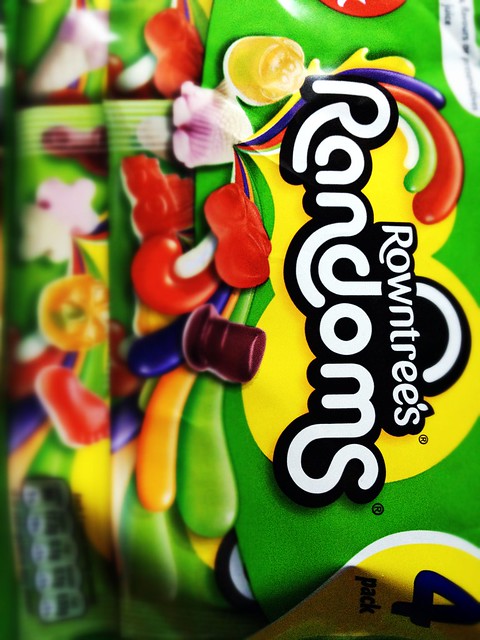 What is randomness ?
We use random numbers in geography when carrying out geography fieldwork - this is used to identify points within a field area and aid sampling techniques.
I used to do fieldwork on salt marshes with sixth form groups and we would use random number tables to choose our locations. But how random were those numbers ? And did we use them correctly ?
Randomness is an interesting statistical concept.
Does pressing the random number key on a calculator really generate a truly 'random' number ?
There was a useful article on the nature of randomness.
Wind Turbines and bird deaths are a story which has been used to indicate the downsides of this form of alternative energy. Do birds really fly into the turbines and get killed in any sort of numbers ?
How random would this act be ? Or are there particular places that are more at risk of bird strike ?
How about this for another way to explore randomness...
I bought some pack of Random sweets. These are made by Nestle. They contain apparently a random set of strange jelly items. How random are they ? Would be interesting to find out how many of the packs are similar...
Similar sweets may be available in your own country of origin.
For a slightly better explanation of all things random, you should take a read of this recent post by Jess Whittlestone on the fact that we tend to see patterns in everything.
Image: Alan Parkinson
Saturday, 6 September 2014
Research in Education
The Research in Education event was held this weekend.
It brought together a range of educators with a background or interest in how research could influence classroom practice.
One presentation by David Didau not only had some interesting insights into the value of research, but also on the nature of causality and coincidence... Some good examples to use when showing why it's important to be sceptical about the use of statistics on occasions...
It brought together a range of educators with a background or interest in how research could influence classroom practice.
One presentation by David Didau not only had some interesting insights into the value of research, but also on the nature of causality and coincidence... Some good examples to use when showing why it's important to be sceptical about the use of statistics on occasions...
Monday, 25 March 2013
Statistics in the UK Curriculum
“My basic idea is that the world has changed so much, what people need
isn’t more data but a new mindset …countries and corporations alike need
to adopt that same data-driven understanding of the world if they are
to make sense of the changes we are experiencing in this new century and
the opportunities and challenges that lie ahead”
Professor Hans Rosling
One of the tasks of the I've started to explore this with the aid of a few sources, is to explore where statistics lies within the UK curriculum. We are looking to map the places where statistics and databases are covered other than the obvious place within the Mathematics and ICT areas.
In early January, there was a useful and timely article in the Times Educational Supplement (TES). I'd bought a copy as there was an article in it by a colleague of mine: Paula Owens, but found the statistics article was perhaps more useful.
Regardless of your subject interest, if you can help and identify a place where statistics is mentioned and forms part of your subject at KS3 or KS4 please get in touch, or add a comment below. That will help feed into the work that is already being done in this area.
Subscribe to:
Posts (Atom)